Website-to-CRM integration: preventing lost inquiries
How to design reliable lead transfer from a website to CRM, including fields, attribution, deduplication, notifications, errors, and end-to-end proof.
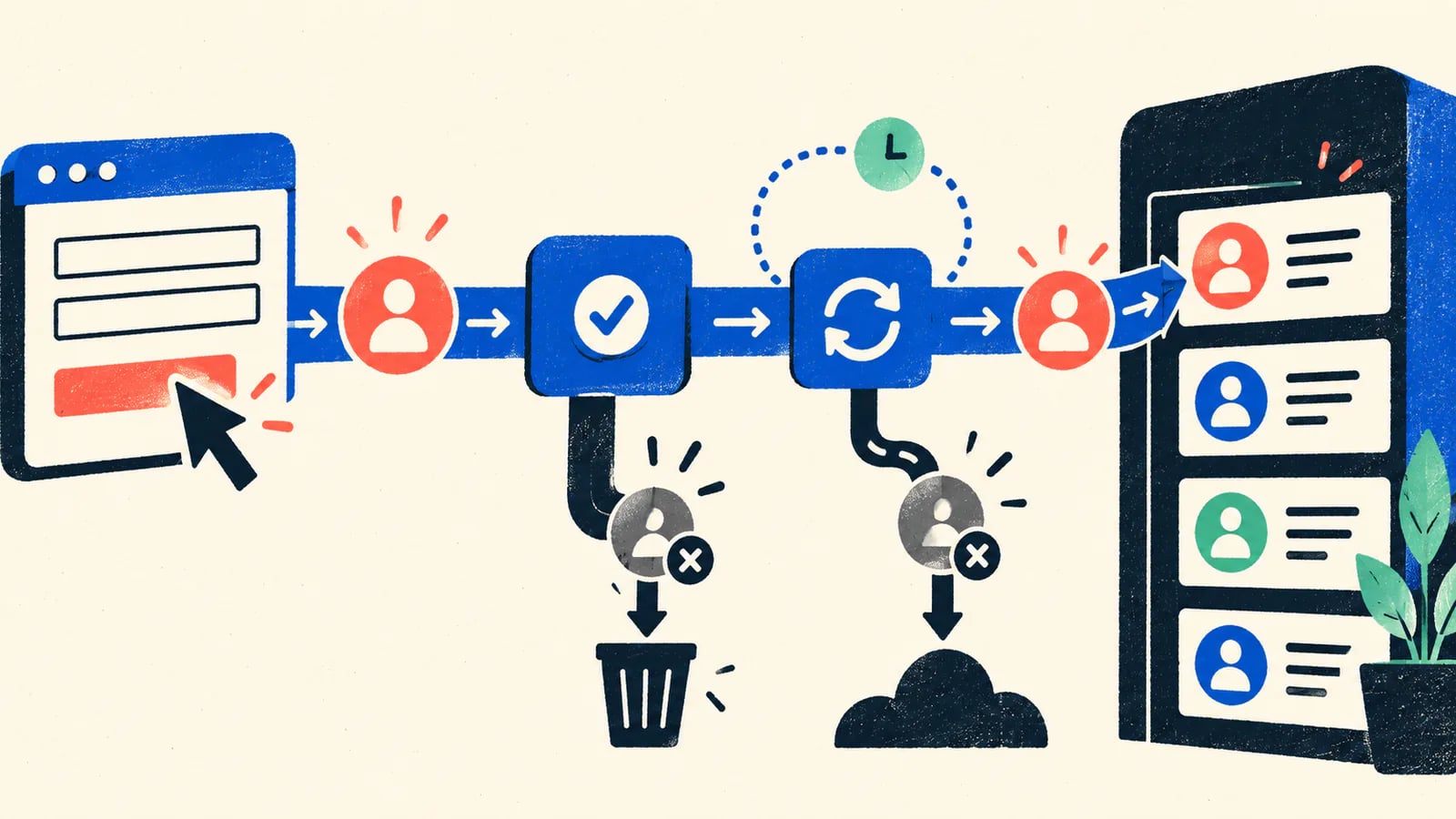
Map the inquiry journey
List every entry point: primary form, callback, newsletter, email, and messenger. Define required fields, ownership, and expected response time for each one.
A form should not send data into a black box. The visitor needs a clear status, while the team needs the source, page, campaign, and message context.
Transfer useful context
Beyond name and contact details, capture the page, form, language, UTM parameters, visit identifier, and selected service when relevant. This context improves routing and attribution.
The data must match the visible form and privacy disclosure. Do not collect a field merely because the CRM contains it.
Handle duplicates and failures
A repeated click, slow network, or temporary CRM outage should not create multiple deals. Use an operation identifier, controlled retries, and a result log.
If CRM is unavailable, preserve the inquiry through a fallback channel and alert the team. Do not show success before the target result is confirmed.
Verify the whole path
A form test does not end with an HTTP 200 response. Open the real CRM record, inspect the fields and source, verify the notification, and confirm the visitor’s success state.
The analytics goal should fire only after confirmed submission. Otherwise ad systems learn from failed and empty attempts.
Questions and answers
Which website fields should be sent to CRM?
Send only what the process needs: contact details and useful context such as source, page, UTM parameters, selected service, language, and the message.
How do you prove the integration works?
Submit a controlled inquiry and verify the CRM record, fields, attribution, notification, deduplication, and the visitor-facing confirmation.
.webp&w=1920&q=85)